Tag: Therapy Abroad

International SLP Clinical Placements: Powerful Strategies to Transform Recruitment and Global Workforce Impact

International SLP clinical placements are no longer optional enhancements to speech-language pathology programs. They are becoming central to how departments recruit students, diversify cohorts, and prepare graduates for an increasingly global profession. Across the United States, SLP faculty and department chairs are navigating rising interest in international student enrollment, increasing demand for global clinical opportunities, and the need to modernize curriculum to reflect multilingual and culturally complex practice environments. When designed intentionally, international SLP clinical placements can support all three priorities at once.

International SLP clinical placements create a bridge between global engagement and workforce development. Programs that integrate structured international experiences and reciprocal partnerships report stronger student engagement, enhanced professional identity development, and increased recruitment interest from both domestic and international applicants. At a time when departments are competing for highly qualified students and responding to calls for increased diversity in the profession, strategic internationalization offers a powerful solution.

International Students in U.S. Programs and the Role of International SLP Clinical Placements

International students bring significant linguistic, cultural, and intellectual capital to U.S. SLP programs. They broaden classroom discussion, expand perspectives on disability and communication, and frequently return to countries with limited SLP infrastructure to build services and train future professionals. Research examining international students in SLP clinical education contexts suggests that differences in clinical communication styles or supervisory expectations are often small and responsive to structured support and mentoring. When programs provide transparent expectations, scaffolded supervision, and culturally responsive feedback systems, international students demonstrate competency outcomes comparable to domestic peers.

International SLP clinical placements can further support international students by offering structured opportunities to connect theory to practice in culturally complex settings. These placements allow international students to draw on their linguistic and cultural strengths while developing clinical reasoning skills in diverse environments. For departments interested in expanding international enrollment, pairing recruitment strategies with clearly defined international SLP clinical placements strengthens both student success and program appeal.

At the same time, admissions research highlights how underrepresented applicants often navigate hidden curriculum barriers, relying on peer networks, mentorship, and community cultural wealth to access graduate education. International students frequently encounter similar structural challenges. Transparent advising pathways, structured clinical preparation guidance, and explicit performance rubrics reduce ambiguity and improve retention. International SLP clinical placements become most effective when embedded within a broader system of advising reform and mentorship infrastructure.

American Students Working Abroad Through International SLP Clinical Placements

The global movement of clinicians is not one-directional. Increasing numbers of U.S.-educated SLPs are seeking opportunities to work abroad or participate in international service partnerships. Research examining U.S.-trained clinicians navigating international practice highlights critical themes including contextual adaptation, limited resources, regulatory ambiguity, and the need for resilience. These findings underscore an important reality. U.S.-based training does not automatically translate into culturally responsive international practice.

International SLP clinical placements provide an opportunity to prepare students for this complexity before they graduate. Rather than positioning international experiences as short-term observational trips, programs can design international SLP clinical placements that emphasize ethical engagement, community partnership, and reciprocal learning. Pre-departure training in multilingual assessment, health systems literacy, and cultural humility strengthens student readiness. On-site supervision aligned with competency standards ensures accountability. Post-placement reflection integrates experience into professional identity formation.

Faculty often ask whether international SLP clinical placements can align with accreditation requirements and ASHA competencies. The answer is yes, when placements are intentionally structured. Competency mapping, supervision documentation, and reflective assessment tools allow departments to demonstrate that international clinical hours meet the same performance standards as domestic placements. When executed thoughtfully, international SLP clinical placements enhance rather than complicate accreditation alignment.

Curriculum Innovation and the Strategic Integration of International SLP Clinical Placements

Internationalization should not be treated as an extracurricular add-on. The most effective programs integrate international SLP clinical placements into broader curriculum reform. Three areas consistently emerge as high-impact opportunities.

First, advising and mentorship systems must be strengthened. Underrepresented and international students benefit from structured advising models that clarify clinical expectations and reduce hidden curriculum barriers. Embedding international SLP clinical placements within advising conversations signals institutional commitment to global engagement and student support.

Second, curriculum must explicitly address cultural humility, multilingualism, and global health systems. Students require instruction in how language hierarchies, disability frameworks, policy structures, and historical inequities shape communication services worldwide. International SLP clinical placements provide a practical laboratory for applying these frameworks.

Third, partnerships must be reciprocal and sustainable. Ethical international SLP clinical placements are built in collaboration with local ministries, schools, rehabilitation centers, and community leaders. They are not extractive models. They emphasize continuity, capacity building, and long-term relationship development. Departments that prioritize reciprocity strengthen both global credibility and student learning outcomes.

Recruitment Advantages of International SLP Clinical Placements

From a recruitment perspective, international SLP clinical placements differentiate programs in a competitive marketplace. Prospective students increasingly seek meaningful global engagement opportunities. Faculty-led placements signal quality and safety. Structured supervision reassures families and institutional administrators. Clear articulation of learning outcomes enhances credibility.

International students evaluating U.S. programs are particularly attentive to opportunities that recognize and value multilingualism and global experience. When departments promote well-designed international SLP clinical placements, they communicate openness, innovation, and workforce relevance.

International SLP clinical placements also support alumni engagement and donor interest. Graduates who participate in global experiences often maintain long-term connection to programs that facilitated those opportunities. This relational continuity strengthens program reputation and network growth.

Supporting Faculty and Reducing Administrative Burden

Department chairs frequently express concern about faculty workload and administrative complexity when considering international expansion. Effective international SLP clinical placements must include logistical infrastructure, community coordination, risk management planning, and supervision mapping. When external partners manage on-the-ground logistics and coordinate community relationships, faculty can focus on teaching and supervision rather than travel administration.

International SLP clinical placements should reduce faculty stress, not increase it. Clear communication channels, defined supervisory roles, and alignment with institutional policies are essential. Programs that implement these structures successfully report high faculty satisfaction and sustained participation.

The Future of the SLP Workforce

The future SLP workforce will be multilingual, mobile, and globally interconnected. Domestic clinical settings increasingly reflect global migration patterns and cultural diversity. International SLP clinical placements prepare students for this reality. They strengthen adaptability, empathy, ethical reasoning, and collaborative practice.

Departments that strategically integrate international SLP clinical placements position themselves as leaders in workforce innovation. They signal commitment to diversity, equity, and global partnership. They attract students who are motivated by purpose and impact.

If you are a department chair or SLP faculty member interested in recruiting international students, developing structured international SLP clinical placements, or integrating global engagement into your curriculum, now is the time to explore partnership opportunities. International SLP clinical placements are not simply about travel. They are about preparing clinicians who can serve complex communities with competence, humility, and resilience.

The next chapter of speech-language pathology will be written by programs willing to think globally while acting responsibly. International SLP clinical placements are one of the most strategic ways to begin.

A Call to Collaboration

The future SLP workforce will be multilingual, mobile, and globally interconnected. Programs that intentionally integrate international students, ethical global placements, and curriculum innovation will be best positioned to lead.

If you are a department chair or faculty member interested in:

• Recruiting and supporting international students
• Developing structured international clinical placements
• Strengthening cultural humility outcomes
• Expanding global health curriculum content

We would welcome a conversation.

The next phase of the profession will not be built in isolation. It will be built through partnership. Let’s talk.

Kris Brock Ph.D. CCC-SLP

Academic Director

aac@therapyabroad.org
Filed under: Academic Insights, Student Experiences, Career Insights, Blog, Speech Language Pathology, Graduate SchoolTagged with: , , , , , , , , ,

Physical Therapy in Belize: An Interview on Impact, Learning, and Connection Through Therapy Abroad

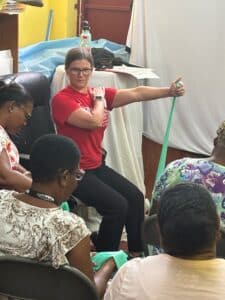
Physical therapy in Belize offers a unique opportunity to combine clinical education, cultural humility, and meaningful community engagement. In many parts of Belize, individuals recovering from stroke, injury, or chronic illness face limited access to rehabilitation services. Through partnerships with local providers and community organizations, Therapy Abroad supports sustainable models of care while offering immersive learning experiences for physical therapy students and faculty.

Physical therapy in Belize challenges students to think creatively, adapt evidence-based practice in low-resource environments, and engage directly with patients and families in ways that extend far beyond traditional classroom learning. To better understand the value of this experience, I spoke with Rebecca Medendorp, a professor in the Doctor of Physical Therapy program at High Point University, who has been traveling to Belize with Therapy Abroad for the past three years.


Kris: You have been bringing physical therapy students to Belize for several years now. What makes traveling with Therapy Abroad unique for you and your students?

Rebecca: What makes Therapy Abroad different and special is the amazing amount of support. That support starts long before the trip and continues once we are on the ground. There are local experts who know the area, know the patients, and know the community. They help connect us with appropriate patients and guide us through where we are staying and working. Therapy Abroad supports us on multiple levels and makes it really easy to prepare for these trips and focus on student learning.


Kris: You mentioned that there are many moments that stay with you. Is there one story from Belize that you will always take home with you?

Rebecca: There are honestly hundreds of stories, but one that really stands out is a man who had suffered a stroke. He had been sent home from the hospital and had been using a wheelchair for over a month. We were the first people to get him back up on his feet and show his family that he could potentially regain the ability to walk. His family was crying, we were crying. It was incredibly powerful to see that hope and to watch the patient realize that there was a future where he could walk again. It was also special to see the students be the ones to help provide that hope.


Kris: What has been your proudest moment watching students during these trips?

Rebecca: I love seeing the light bulbs go off for students. They usually have some clinical experience before coming, but this environment is very different. We have limited equipment and limited resources, so students have to rely on their hands and their creativity. Watching them realize that they can still make a real impact, even as students, is incredibly rewarding to be a part of.


Kris: Not every moment is serious. What made you laugh the hardest on this trip?

Rebecca: A lot of our funniest moments have involved tarantulas. It usually means turning over a trash can and escorting a fuzzy critter out of the room. Most of my tear-laughing, belly-laughing moments in Belize have involved tarantulas. I will say, though, I have only seen two in three years, so you might not even see one at all.


Kris: After returning multiple years, what do you feel most proud of when you are in Belize?

Rebecca: I feel most proud of the connections we make. We build relationships with patients and get to see them again in future years. They give us updates on their families and their lives, and we see how we have impacted them. The connections with the local staff and skilled nursing facilities are also very real. I still reach out to many of those people to this day. There are lots of hugs, lots of tears, and a lot of genuine appreciation.


Kris: If you had to describe this experience in one word, what would it be?

Rebecca: Impact. We are there for about a week, but the impact on student learning, on patients, and on the community is life-changing.


Physical therapy in Belize illustrates how short-term global programs can produce long-term outcomes when they are grounded in partnership, reflection, and community trust. For students, these experiences foster clinical confidence, adaptability, and professional identity. For communities, they expand access to care and reinforce collaborative relationships that continue year after year.

Programs like physical therapy in Belize through Therapy Abroad demonstrate that global clinical education is not about observation alone. It is about contribution, connection, and impact that extends well beyond the duration of the trip.

If you are a student, educator, or clinician seeking a global experience rooted in ethical engagement and meaningful learning, physical therapy in Belize offers a powerful model for what international education can be.

Global Health. Local Impact.

Filed under: Physical Therapy Abroad, Professional Perspectives, Academic Insights, Graduate SchoolTagged with: , , ,

Therapy Abroad Partners with Dominica’s Yes We Care Programme to Expand Home Health Support

Therapy Abroad Partners with Dominica’s Yes We Care Programme to Expand Home Health Support

Therapy Abroad is proud to partner with Dominica’s Yes We Care Programme to strengthen home health care services for elderly adults and individuals with disabilities across the island. This collaborative global health partnership reflects a shared commitment to community-based care, caregiver support, and sustainable impact in underserved communities.

Known as the “Nature Island” of the Caribbean, Dominica is rich not only in biodiversity but also in resilience, culture, and community connection. Through this partnership, Therapy Abroad works alongside local caregivers to enhance home-based health services while offering meaningful international service-learning experiences for therapy students and professionals. Rather than replacing existing systems, this collaboration builds capacity, supports caregivers, and reinforces person-centered care within clients’ homes.


About the Yes We Care Programme

Established in 2009, the Yes We Care Programme is a government-supported home-health initiative dedicated to serving some of Dominica’s most vulnerable citizens—elderly adults and individuals with significant disabilities who are unable to fully care for themselves.

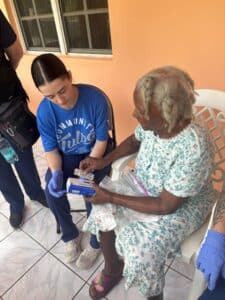
Caregivers in the program provide essential in-home support including personal hygiene care, feeding assistance, dressing, mobility help, home tidying, and companionship. Many clients receive seven-day-a-week care, especially those who are bedridden or living with complex needs. The programme also extends beyond personal care, helping clients safely maintain their homes, access utilities, and receive environmental or structural support when necessary.

YWCP caregivers undergo ongoing training in areas such as vital-sign monitoring, documentation, oral care for bedridden individuals, and feeding techniques. This strong foundation makes the programme an ideal partner for collaborative therapy support and capacity-building work.

A Partnership Rooted in Service and Sustainability

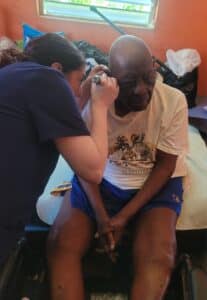
For the past year Therapy Abroad teams work alongside Yes We Care caregivers and supervisors to support home-health services across the island. Our role is centered around enhancing existing care, offering therapeutic perspectives, and engaging in collaborative learning, not replacing or reshaping the program’s mission.

During program visits, our teams may help with:

  • Functional mobility activities
  • Feeding and swallowing strategies
  • AAC (augmentative and alternative communication) supports
  • Environmental modifications for safety
  • Basic therapy-focused caregiver training
  • Home-visits focused on improving quality of life

The combination of caregiver knowledge and therapy-based insight makes the work especially impactful, creating opportunities to support clients more holistically.

The Impact on Caregivers, Clients, and Communities

For Yes We Care clients, the partnership means access to supportive services that may enhance comfort, communication, independence, and daily functioning. For caregivers, it offers shared learning, new tools, and clinical insights that can strengthen the daily work they already perform with compassion and consistency.

For our students and professionals, the experience is equally transformative. Working in homes across Dominica offers a firsthand look at community health, cultural humility, resource adaptation, and the power of person-centered care. Dominica’s close-knit communities and natural beauty provide a backdrop for meaningful reflection and authentic connection.


Why Dominica? Why This Partnership?

Dominica is known for more than its lush rainforests and volcanic landscapes—it is known for its resilient people and strong sense of community. Partnering with a program that prioritizes dignity, respect, and home-based support allows Therapy Abroad participants to contribute to a system built on care rather than clinical walls.

This collaboration also embodies Therapy Abroad’s core values: sustainability, culturally grounded service, and mutual learning. Instead of “mission work,” this is a two-way exchange, strengthening long-term community systems while helping future clinicians grow in competence and compassion.

Looking Ahead

Therapy Abroad’s partnership with the Yes We Care Programme represents a sustainable model for strengthening home health care in Dominica and across the Caribbean. By working collaboratively with caregivers and community leaders, this global health initiative supports elderly and disabled individuals while fostering shared learning and culturally grounded therapeutic care.

As this partnership continues to grow, Therapy Abroad remains committed to expanding capacity-building efforts, supporting caregiver education, and enhancing quality of life through compassionate, home-based therapy services. Together with the Yes We Care Programme, we are building long-term community health systems—one home visit, one caregiver partnership, and one meaningful connection at a time.

Filed under: In-Country PartnershipsTagged with: , , , , , ,