Home / Continuing Education / Caribbean Classroom Initiative
- Continuing Education
Caribbean Classroom Initiative
Practical professional development shaped by Caribbean education priorities.
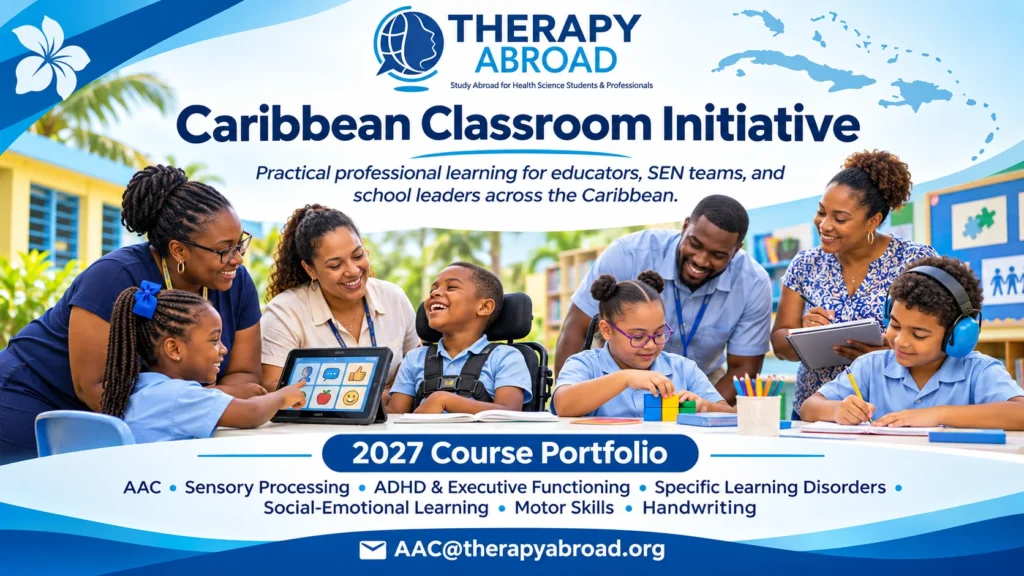
The Caribbean Classroom Initiative is a Therapy Abroad professional development program for educators, SEN personnel, school leaders, support staff, therapists, and related professionals across the Caribbean. Courses are designed to complement existing expertise by providing practical strategies, guided application, and opportunities for educators to discuss how new tools and approaches can be adapted to their own classrooms, schools, and communities.
Each course combines self-paced online learning with live instructor-led sessions focused on demonstration, discussion, questions, and application. Ministries and school leaders are also invited to help identify training priorities and explore country-specific or sponsored cohorts.
About the Caribbean Classroom Initiative
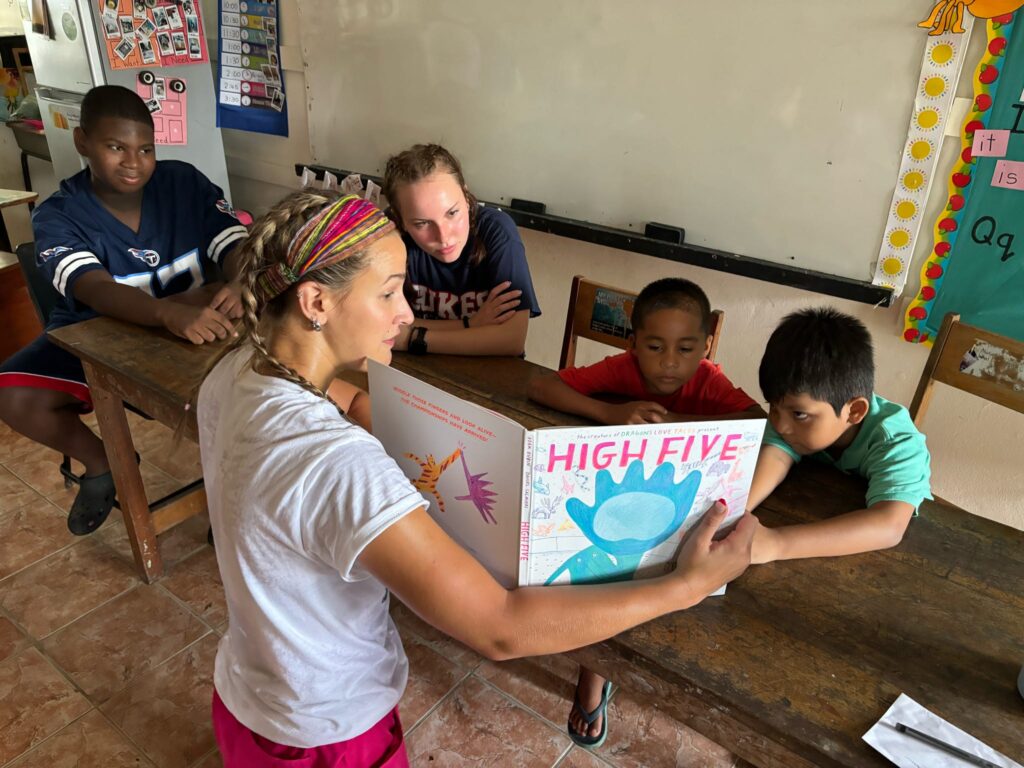
Teachers across the Caribbean already bring professional knowledge, local expertise, and daily experience supporting diverse learners. The Caribbean Classroom Initiative is designed to strengthen the bridge between knowledge and practical application by creating structured opportunities to learn, try strategies in context, ask questions, and refine implementation with instructors and colleagues.
Rather than prescribing a fixed sequence of courses or a single approach for every setting, Therapy Abroad invites input from educators, schools, and Ministries of Education regarding professional development priorities. The 2027 portfolio spans communication, sensory processing, motor development, handwriting, social-emotional learning, ADHD and executive functioning, and specific learning disorders. Course scheduling and future offerings can evolve in response to local priorities and participant interest.
Partnership approach: The initiative is intended to be collaborative, practical, and responsive. Course content provides evidence-informed tools and frameworks, while educators and education leaders determine how those tools fit their students, communities, policies, resources, and local educational context.
Practical professional learning that complements local expertise
Therapy Abroad partners with educators, SEN teams, school leaders, and Ministries of Education across the Caribbean to provide practical professional development that can be adapted to local priorities, school contexts, and learner needs.
Partnership principle: The initiative is intended to complement the knowledge and expertise already present within Caribbean education systems, not replace it.
Who Is It For?
Depending on the course, the Caribbean Classroom Initiative may be relevant for:
General and special education teachers
SEN and special education personnel
Teaching assistants and classroom support staff
School administrators and principals
School counselors and psychologists
Speech-language pathologists, occupational therapists, physical therapists, and related professionals
Curriculum, teacher development, student support, and Ministry of Education personnel
Other professionals who support students with disabilities or additional learning needs
How the Professional Development Model Works
Six-week hybrid courses: self-paced learning during the week plus one live online session for discussion, demonstration, questions, and application.
Course length
Six weeks per course.
Self-paced learning
Participants complete asynchronous video or self-paced instructional content during the week.
Live application
Participants join a live online session each week for demonstration, discussion, questions, problem solving, and practical application.
Continuing education certificate
Participants who complete course requirements receive a certificate documenting 20 hours of continuing education.
Standard course fee
$200 USD per participant. Therapy Abroad may discuss alternative arrangements for Ministry-sponsored cohorts or larger groups.
Technology
Reliable internet access and a desktop or laptop computer are generally required. Course-specific requirements are listed with each offering.
Scheduling
Final schedules may be coordinated with participant and Ministry needs when possible.
Important certificate language: The certificate documents completion of 20 hours of continuing education. Participants should confirm with their Ministry, employer, licensing body, or professional organization whether the hours meet any specific local renewal, credentialing, or continuing education requirement.
Course evaluation: Therapy Abroad may collect participant feedback, completion information, and examples of application to improve course quality. This routine program evaluation is separate from research activities.
2027 Course Portfolio
The current 2027 portfolio includes seven courses. Dates and sequencing for several offerings remain flexible so that Therapy Abroad can respond to participant interest and Ministry priorities.
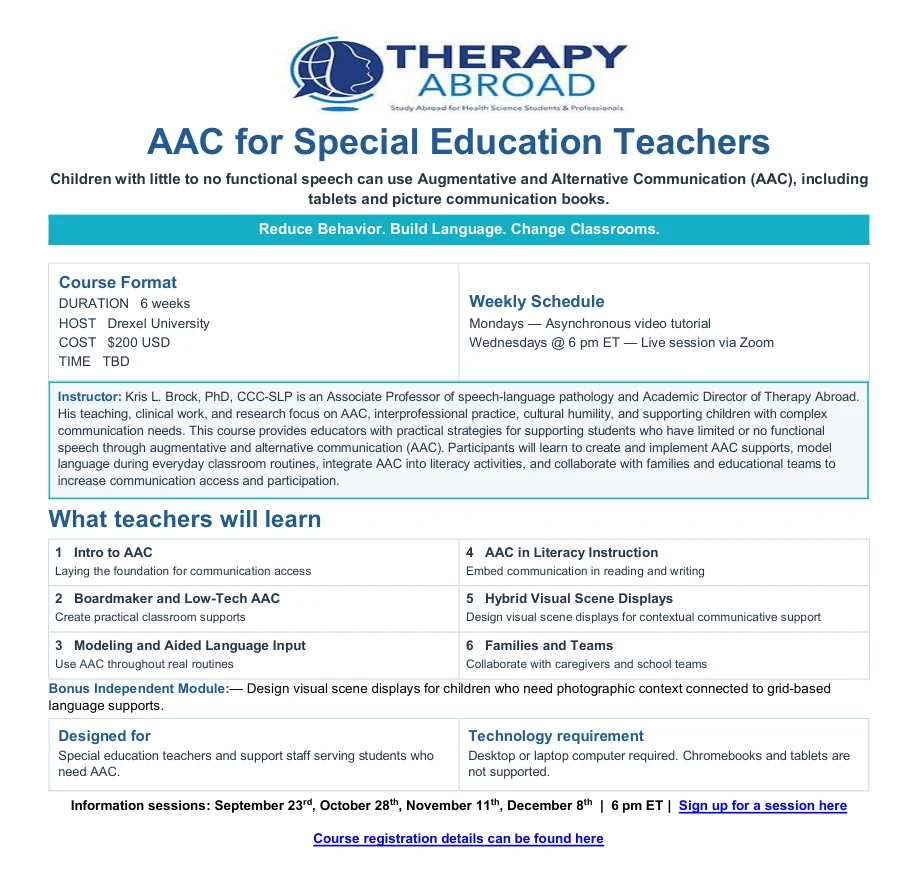
AAC for Special Education Teachers
Designed for: Special education teachers and support staff serving students who need AAC.
This course provides practical strategies for supporting students who have limited or no functional speech through augmentative and alternative communication (AAC). Participants learn to create and implement classroom communication supports, model language during everyday routines, integrate AAC into literacy instruction, and collaborate with families and educational teams to increase communication access and participation.
Participants will explore:
- Introduction to AAC and communication access
- Boardmaker and low-tech AAC supports
- Modeling and aided language input
- AAC in literacy instruction
- Hybrid visual scene displays
- Collaboration with families and teams
Format: Six weeks | $200 USD | Asynchronous learning plus weekly live session | Host: Drexel University
Technology: Desktop or laptop computer required. Current AAC course materials indicate that Chromebooks and tablets are not supported.
Instructor: Kris L. Brock, PhD, CCC-SLP
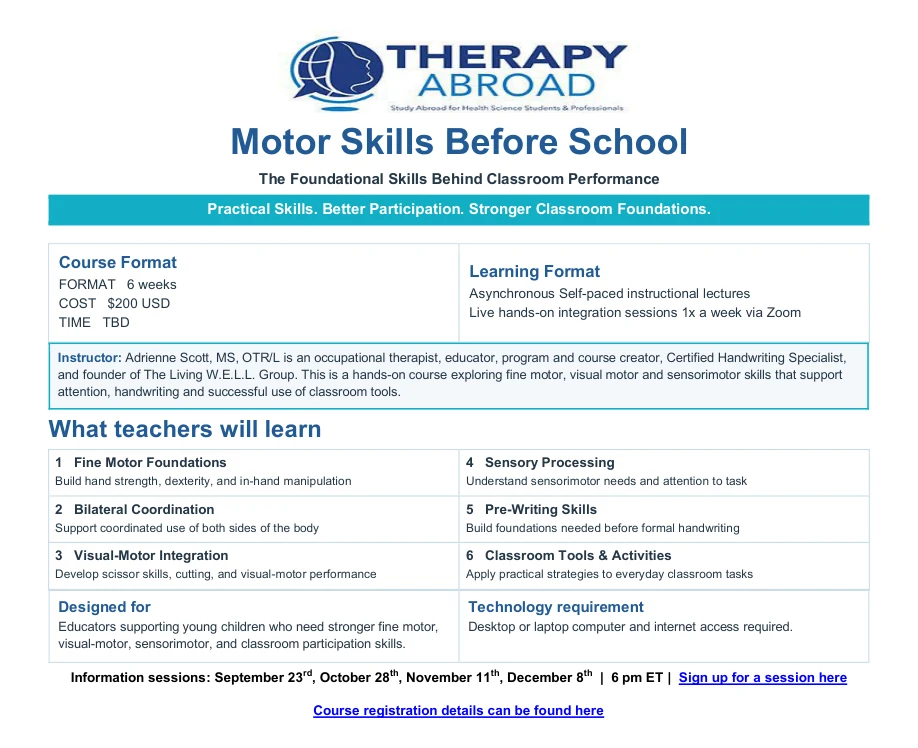
Motor Skills Before School
Designed for: Educators supporting young children who need stronger fine motor, visual-motor, sensorimotor, and classroom participation skills.
A hands-on course exploring the motor and sensorimotor foundations that support attention, handwriting, classroom tool use, and participation. Participants learn practical strategies that can be integrated into everyday classroom routines and activities.
Participants will explore:
- Fine motor foundations, hand strength, dexterity, and in-hand manipulation
- Bilateral coordination
- Visual-motor integration, scissor skills, and cutting
- Sensory processing and attention to task
- Pre-writing skills
- Classroom tools and practical activities
Format: Six weeks | $200 USD | Self-paced instruction plus weekly live hands-on integration session
Technology: Desktop or laptop computer and reliable internet access required.
Instructor: Adrienne Scott, MS, OTR/L
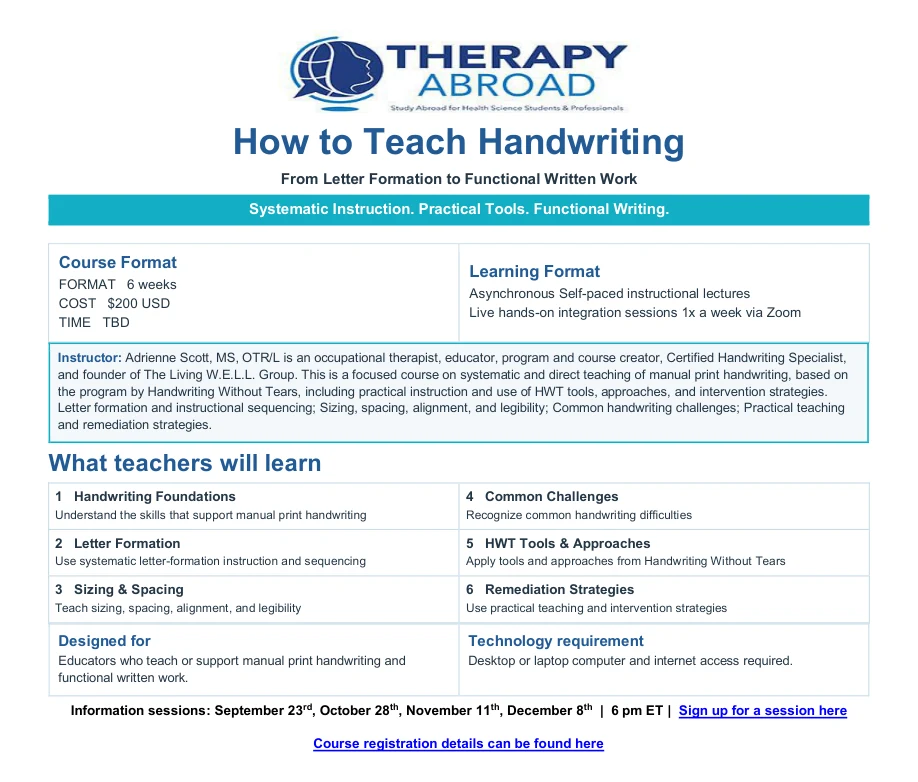
How to Teach Handwriting
Designed for: Educators who teach or support manual print handwriting and functional written work.
A focused course on systematic and direct teaching of manual print handwriting, including practical use of Handwriting Without Tears tools, approaches, and intervention strategies. The course emphasizes instruction that supports functional written participation rather than handwriting practice in isolation.
Participants will explore:
- Handwriting foundations
- Systematic letter-formation instruction and sequencing
- Sizing, spacing, alignment, and legibility
- Recognition of common handwriting challenges
- Handwriting Without Tears tools and approaches
- Practical remediation and intervention strategies
Format: Six weeks | $200 USD | Self-paced instruction plus weekly live hands-on integration session
Technology: Desktop or laptop computer and reliable internet access required.
Instructor: Adrienne Scott, MS, OTR/L
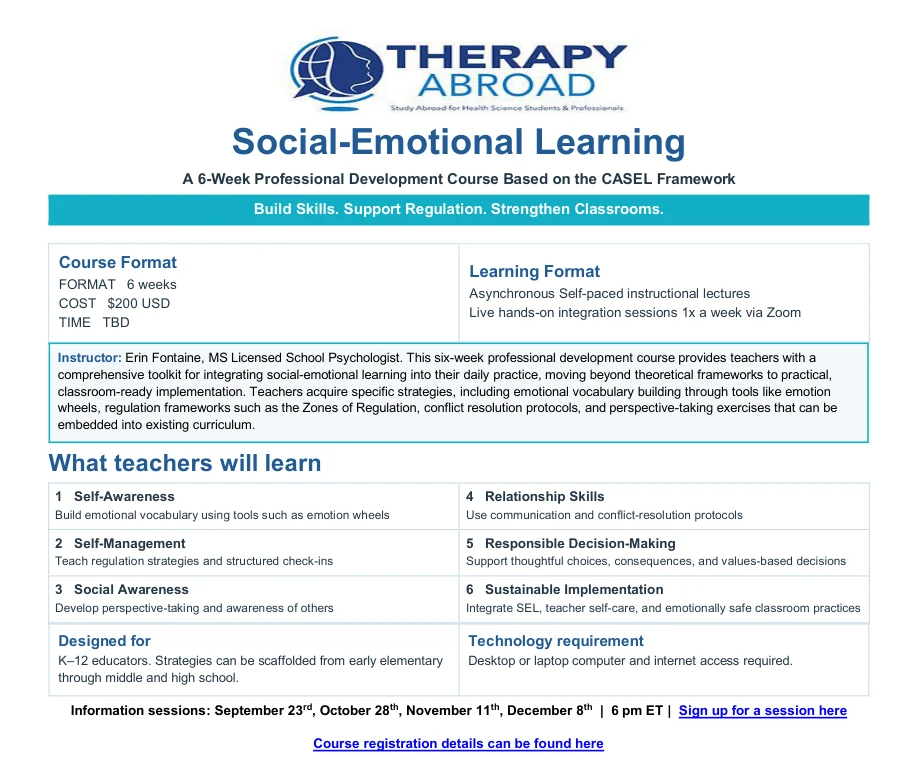
Social-Emotional Learning
Designed for: K-12 educators, with strategies that can be scaffolded across elementary, middle, and high school settings.
This course is based on the CASEL framework and focuses on translating social-emotional learning from theory into practical classroom implementation. Participants explore explicit instruction, routines, and tools that can support emotional vocabulary, self-regulation, relationships, decision-making, teacher well-being, and emotionally supportive classroom environments.
Participants will explore:
- Self-awareness and emotional vocabulary
- Self-management and regulation strategies
- Social awareness and perspective-taking
- Relationship skills and conflict resolution
- Responsible decision-making
- Sustainable implementation and teacher self-care
Format: Six weeks | $200 USD | Self-paced instruction plus weekly live online integration session
Technology: Desktop or laptop computer and reliable internet access required.
Instructor: Erin Fontaine, MS, Licensed School Psychologist
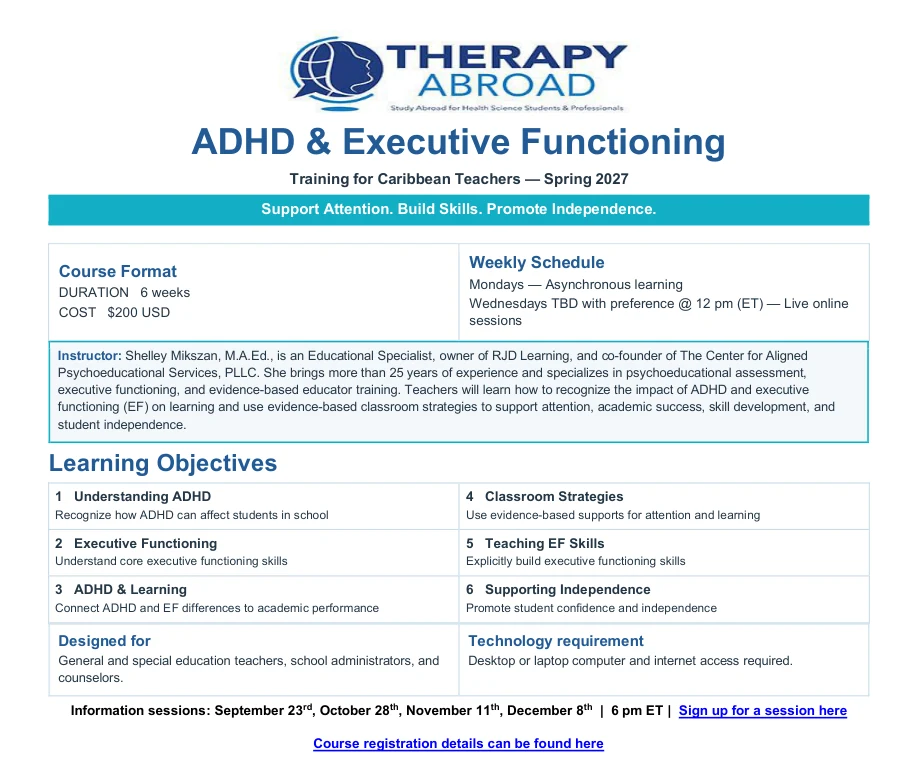
ADHD & Executive Functioning
Designed for: General and special education teachers, school administrators, and counselors.
Participants learn how ADHD and executive functioning can influence learning and classroom participation, and how educators can use evidence-informed strategies to support attention, academic success, skill development, and student independence.
Participants will explore:
- Understanding ADHD
- Executive functioning
- ADHD and learning
- Classroom strategies
- Teaching executive functioning skills
- Supporting independence
Format: Six weeks | $200 USD | Planned for Spring 2027 | Asynchronous learning plus weekly live online sessions
Technology: Desktop or laptop computer and reliable internet access required.
Instructor: Shelley Mikszan, M.A.Ed.
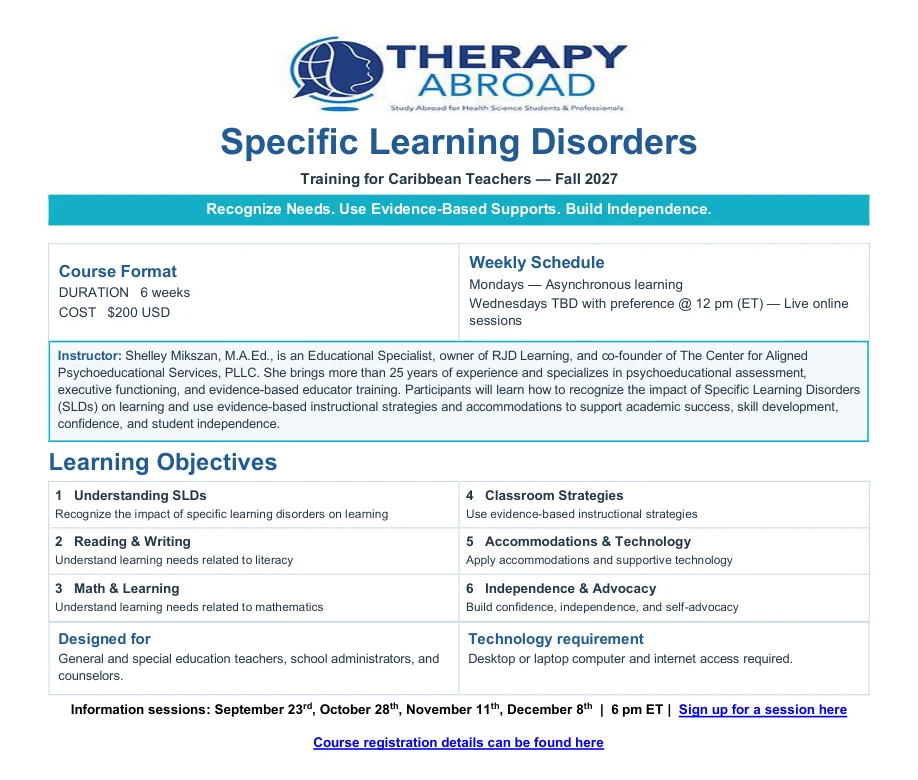
Specific Learning Disorders
Designed for: General and special education teachers, school administrators, and counselors.
This course helps educators recognize how specific learning disorders can affect reading, writing, mathematics, and classroom participation. Participants examine practical instructional strategies, accommodations, technology supports, and approaches that promote confidence, independence, and self-advocacy.
Participants will explore:
- Understanding specific learning disorders
- Reading and writing
- Mathematics and learning
- Classroom strategies
- Accommodations and technology
- Independence and advocacy
Format: Six weeks | $200 USD | Planned for Fall 2027 | Asynchronous learning plus weekly live online sessions
Technology: Desktop or laptop computer and reliable internet access required.
Instructor: Shelley Mikszan, M.A.Ed.
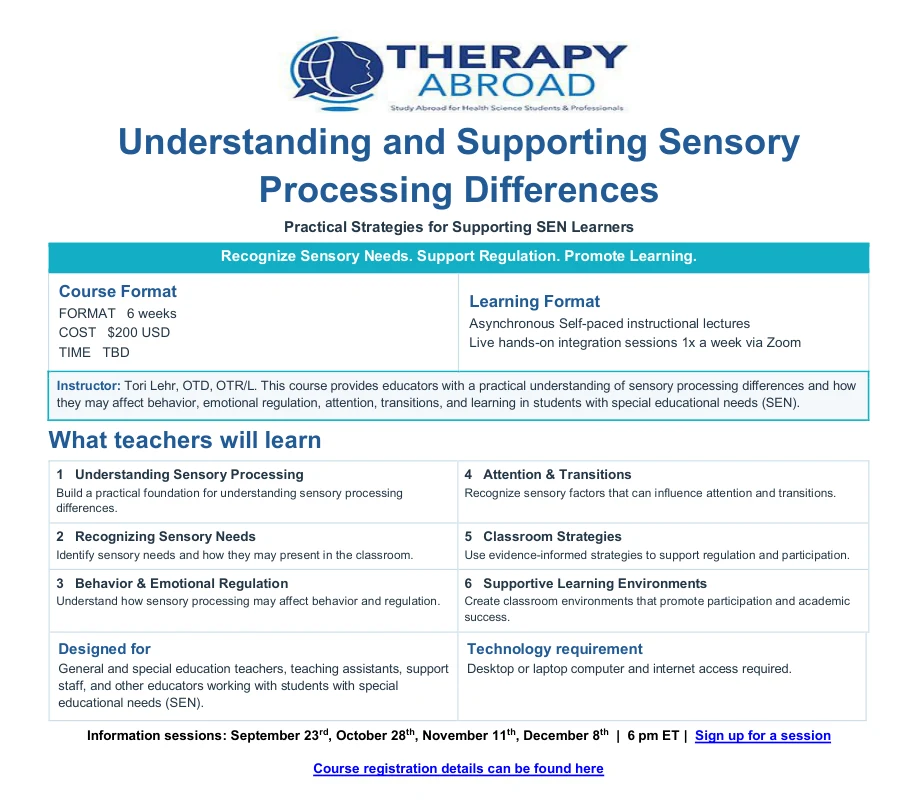
Understanding and Supporting Sensory Processing Differences
Designed for: General and special education teachers, teaching assistants, support staff, and other educators working with students with special educational needs.
This course provides educators with a practical understanding of sensory processing differences and how sensory needs may influence regulation, behavior, attention, transitions, participation, and learning. Participants examine ways to recognize sensory needs and use supportive classroom strategies while considering each student and setting individually.
Participants will explore:
- Understanding sensory processing
- Recognizing sensory needs
- Behavior and emotional regulation
- Attention and transitions
- Evidence-informed classroom strategies
- Supportive learning environments
Format: Six weeks | $200 USD | Self-paced instruction plus weekly live hands-on integration session
Technology: Desktop or laptop computer and reliable internet access required.
Instructor: Tori Lehr, OTD, OTR/L
Instructor Bios

Kris L. Brock
Kris L. Brock is an Associate Professor of Speech-Language Pathology at Idaho State University and the Academic Director and Co-owner of Therapy Abroad. His teaching, clinical work, and research focus on augmentative and alternative communication, interprofessional practice, cultural humility, and supporting children with complex communication needs. Through Therapy Abroad, he develops international clinical education programs and professional training opportunities for students, educators, caregivers, and allied health professionals.
Adrienne Scott
Adrienne Scott is an occupational therapist, educator, program and course creator, Certified Handwriting Specialist, and founder of The Living W.E.L.L. Group. Her professional education work emphasizes practical occupational therapy-based strategies that support participation, independence, fine motor development, visual-motor performance, handwriting, sensory processing, and everyday function.
Erin Fontaine
Erin Fontaine is a licensed school psychologist and instructor for the Caribbean Classroom Initiative Social-Emotional Learning course. Her course uses the CASEL framework to help educators translate social-emotional learning concepts into practical routines and instructional strategies, including emotional vocabulary, self-regulation, perspective-taking, relationship skills, responsible decision-making, and sustainable classroom implementation.
Shelley Mikszan
Shelley Mikszan is an Educational Specialist, owner of RJD Learning, and co-founder of The Center for Aligned Psychoeducational Services, PLLC. A former Director of Student Services, school administrator, and general and special education teacher, she brings more than 25 years of experience supporting students, educators, and families. She specializes in psychoeducational assessment, executive functioning, and helping educators translate research into practical, evidence-based strategies that support learning, confidence, and independence.
Tori Lehr
Tori Lehr is an occupational therapist and instructor for the Caribbean Classroom Initiative course on sensory processing differences. Her course helps educators understand how sensory needs may affect regulation, behavior, attention, transitions, participation, and learning, with an emphasis on practical classroom strategies and supportive learning environments for students with special educational needs.
Ministry and School Partnerships
The Caribbean Classroom Initiative is designed to be flexible. Ministries of Education, schools, and education organizations may participate in several ways, depending on local priorities, resources, and level of interest.
- Share course opportunities with educators, SEN teams, school leaders, support staff, and related professionals.
- Sponsor selected participants or groups of educators.
- Establish a country-specific or organization-specific cohort when there is sufficient interest.
- Identify which course topics should receive priority based on locally identified professional development goals.
- Discuss scheduling, technology access, participant support, and evaluation needs with Therapy Abroad.
- Explore customized professional development or complementary in-country collaboration with Therapy Abroad professionals when appropriate.
Therapy Abroad does not require Ministries to adopt a fixed course sequence. The initiative is intended to evolve, and input from Ministry officials, educators, and school leaders can help shape future training priorities and delivery models.
Interested in a Ministry or school cohort? Contact AAC@therapyabroad.org to discuss priorities, participant numbers, scheduling, and potential cohort arrangements.
Registration and Information Sessions
Information Sessions
Next information session: December 8 | 6 pm ET. Complete the Course Interest + Information Session Form to receive session details.
Course Interest and Information Session Form
Use this form for educators, school leaders, Ministry representatives, and other professionals who want updates, information session details, or help identifying the most relevant course.
Course Registration
Current Caribbean Classroom Initiative registration is hosted through Therapy Abroad’s WeTravel registration page.
Course Brochure
Download the two-page Caribbean Classroom Initiative brochure with the 2027 courses, instructor team, and contact details to share with colleagues, school leaders, or your Ministry.
Refund and Cancellation Policy
Participant cancellation, course cancellation, transfer, and refund terms are set out in the Cancellation & Refund Policy section of Therapy Abroad’s Terms & Conditions. Questions about a registration? Email AAC@therapyabroad.org.
Accessibility and Accommodations
Participants who need captioning, accessible documents, scheduling accommodations, or other access supports should contact Therapy Abroad in advance so that access needs can be discussed and reasonable arrangements can be explored for the course format and materials.
The Course Interest form and the WeTravel registration page collect participant information so our team can respond and manage enrollment. See our Privacy Policy for how this information is used.
Frequently Asked Questions
What is the Caribbean Classroom Initiative?
A Therapy Abroad professional development initiative offering practical online courses for educators, SEN personnel, school leaders, support staff, therapists, and related professionals across the Caribbean.
How are courses delivered?
Courses are generally six weeks long and combine self-paced asynchronous learning with a live online session each week for discussion, demonstration, questions, and practical application.
Are the courses only for special education teachers?
No. The intended audience varies by course. Some offerings are designed specifically for special education or SEN personnel, while others are relevant for general education teachers, administrators, counselors, teaching assistants, and allied health professionals.
Do participants receive a certificate?
Yes. Participants who complete course requirements receive a certificate documenting 20 hours of continuing education. Participants should confirm local recognition requirements with their Ministry, employer, licensing body, or professional organization.
How much does a course cost?
The standard fee is $200 USD per participant. Therapy Abroad may discuss alternative arrangements for Ministry-sponsored cohorts or larger groups.
What technology is required?
Reliable internet access and a desktop or laptop computer are generally required. The AAC course currently requires a desktop or laptop and does not support Chromebooks or tablets.
Can a Ministry choose which course is offered next?
Yes. The course sequence is not fixed. Therapy Abroad welcomes Ministry and educator input regarding professional development priorities and can discuss country-specific cohorts when appropriate.
Can the training be customized?
Potentially. Therapy Abroad can discuss participant needs, scheduling, local priorities, and possible customization with Ministries, schools, and partner organizations.
Is this academic credit or a professional license credential?
The standard offering provides a certificate documenting continuing education hours, not academic credit unless a specific course is separately designated as credit-bearing. Participants are responsible for confirming local professional recognition requirements.
How do I learn more before registering?
Complete the Course Interest and Information Session Form or email AAC@therapyabroad.org.
Can I request an accessibility accommodation?
Yes. Participants should contact Therapy Abroad in advance so that access needs can be discussed and reasonable arrangements can be explored for the course format and materials.
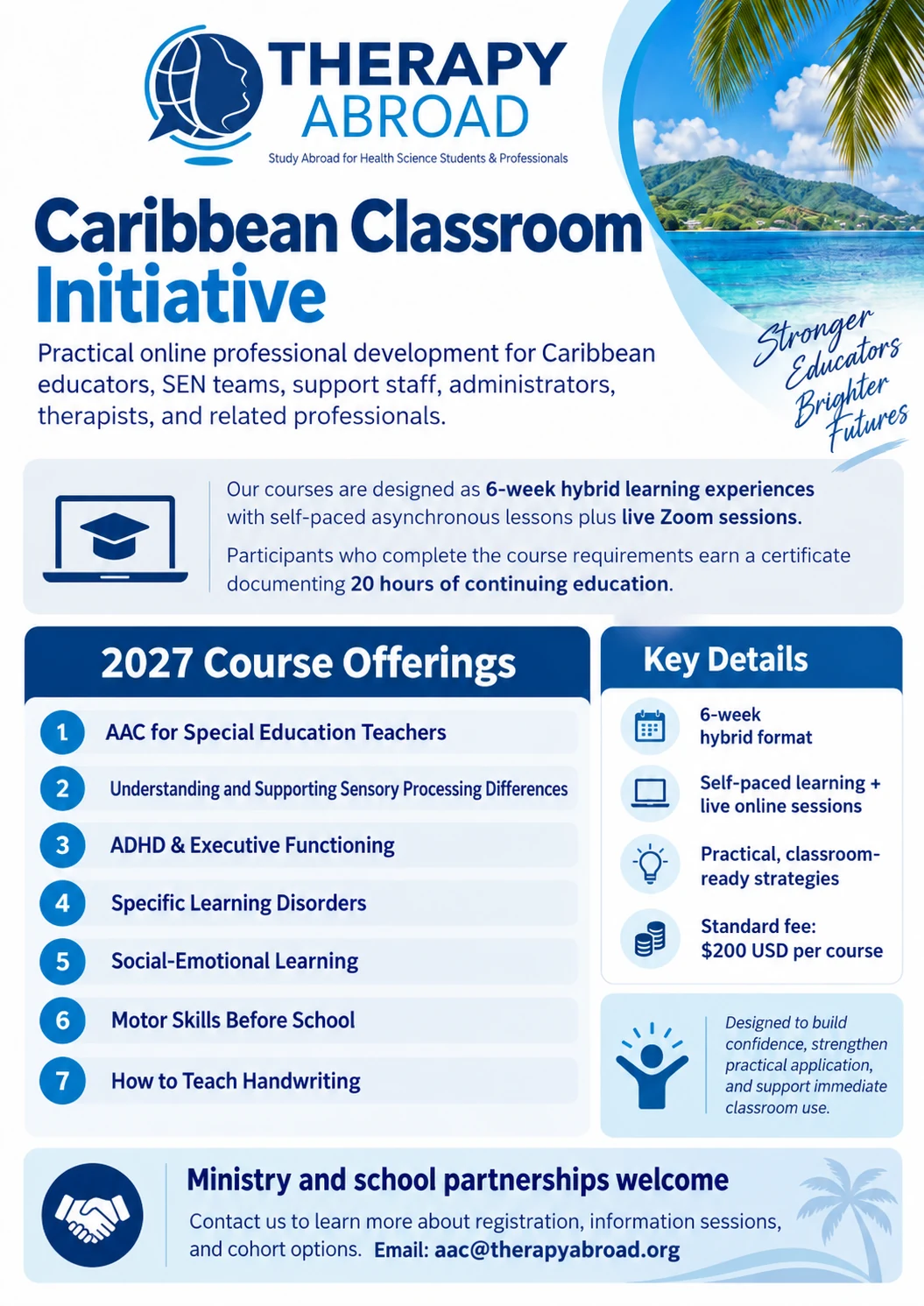
Current Course Flyers
The initiative overview and the current flyer for each 2027 course. Select a flyer to view it full size.
Ready to learn more?
Whether you are an individual educator, school leader, SEN professional, or Ministry representative, Therapy Abroad welcomes the opportunity to discuss the Caribbean Classroom Initiative and identify professional development options that align with your context and priorities.
Contact
Contact: AAC@therapyabroad.org
Academic Director: Kris L. Brock, PhD, CCC-SLP
Organization: Therapy Abroad
Our team will respond to inquiries as soon as possible.