
New for 2027: Northern ItalySpeechies in Rome, Bologna & Venice →
Now Booking: Winter Break 2026Belize 12-Day CSD Immersive, Dec 29 →
Earn College CreditSee how it works →
Bring your research questions into conversation with the people and programs they concern. Therapy Abroad invites university faculty to explore qualitative, quantitative, and mixed-method research through international health sciences education, community partnerships, and professional learning.

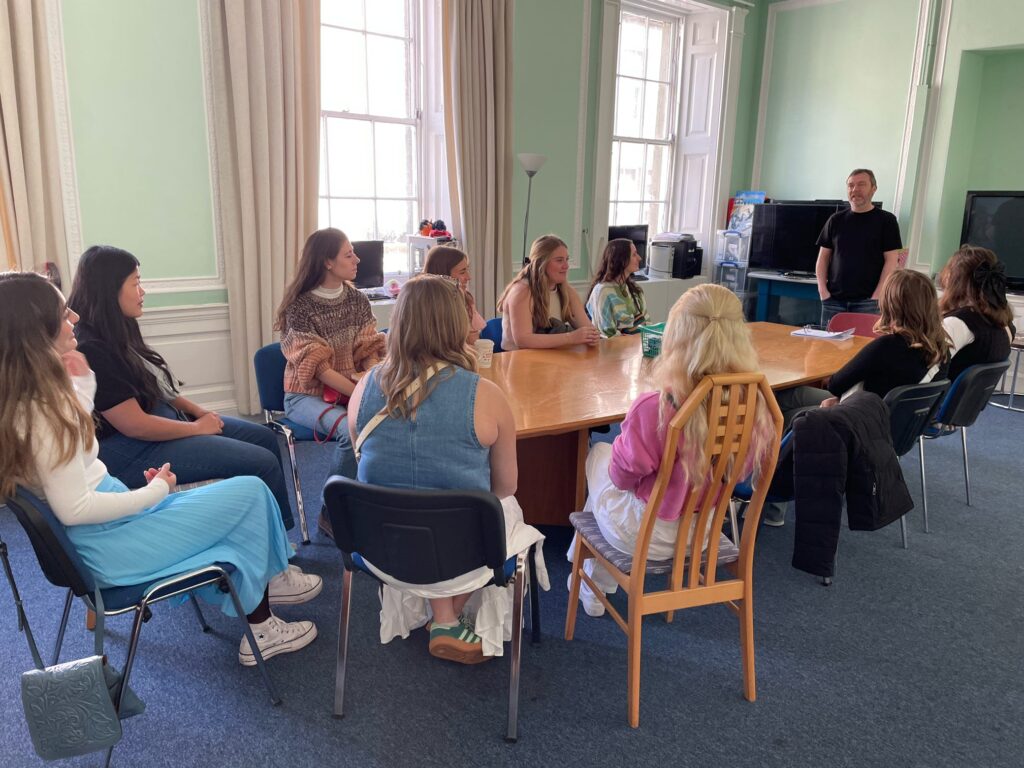
A well-designed international program can support teaching, student mentorship, and scholarly inquiry within the same partnership. Faculty can explore research questions arising from clinical education, interprofessional learning, culturally responsive practice, or community education while helping students understand how evidence is developed.
Therapy Abroad brings program coordination, relationships with local institutions, and an understanding of the practical demands of travel and learning abroad. Faculty bring disciplinary expertise and research leadership. Local collaborators help determine which questions matter and how a project can fit their setting. Together, we can assess whether a proposed study is useful, feasible, and appropriate.
Join us to examine how students learn, what local partners find useful, and how education and rehabilitation initiatives can improve over time. Whether you are developing a pilot study, mentoring a graduate project, or planning a longer collaboration, the first step is a conversation about your question and the priorities of potential partners.
Our student programs and community education have developed together. That creates questions extending beyond a single visit: How do teachers use a training resource over time? What supports a student’s ability to work across languages? How do local partners experience repeated program visits? What makes a clinical handover useful?
The Caribbean Schools Initiative, international CEU courses, and capacity-building activities offer potential starting points for these conversations. Each project depends on local interest, available support, and the approvals required for its particular setting. Participating in a trip does not automatically provide research access.
Discuss a study alongside your course goals and itinerary, allowing time for preparation, approved research activities, and follow-up.
Ask whether you can join an appropriate program to meet potential collaborators and understand the setting before developing a protocol.
Explore repeated visits, multiple cohorts, or remote follow-up when partners have the capacity and interest to sustain the work.
The examples below are starting points for faculty discussion, not active studies or promises of access. We welcome questions from across health sciences, education, and related disciplines.
Explore how people understand and experience a program through interviews, focus groups, observation, or reflective work. Questions might examine student professional identity, teachers’ experiences using classroom strategies, caregiver priorities, or local clinicians’ views of collaboration. Research plans should account for language, researcher positionality, and how findings will be interpreted with local partners.
Examine defined outcomes using measures suited to the population and setting. Potential designs include baseline and follow-up assessments of student learning, structured observations of skill application, or longitudinal evaluation of agreed training objectives. Plan sample size, missing data, comparison strategies, and culturally appropriate measures before travel. A small pilot can assess feasibility without being presented as proof of effectiveness.
Combine measurement with participants’ explanations of their experience. For example, changes in teacher knowledge scores could be explored alongside interviews about which strategies were practical to use. Student competency assessments could be paired with reflective interviews to understand variation in learning.
How does supervised international learning relate to clinical reasoning?
Repeated competency ratings and interviews
How do students adapt their communication across settings?
Observed practice and reflective analysis
Which training strategies do teachers continue using?
Follow-up survey and teacher interviews
How do clinicians apply workshop learning in practice?
Pre-course assessment and later follow-up
What benefits and burdens do local partners identify?
Partner-led interviews and agreed indicators
Research should answer questions that matter to the people involved. We invite faculty to develop the question with local collaborators, consider the demands placed on participants, and agree on useful outputs. That may include a journal article alongside a teacher resource, a partner briefing, or a locally accessible presentation.
The university research team leads study design, ethics review, research training, analysis, and scholarly reporting. Therapy Abroad can discuss program logistics, potential introductions, and how a study could fit the learning experience. Host institutions and relevant local authorities determine the permissions and conditions that apply in their setting. Specific responsibilities and costs should be agreed in writing.
Before recruitment or data collection, obtain the relevant institutional review board or ethics determination and all necessary local permissions. Plan informed consent, language access, confidentiality, secure data handling, and any safeguards for children or other participants requiring additional protections. University approval does not replace destination-specific review or authorization.
Participation in research must be voluntary and distinct from access to services, grades, or program participation. Faculty should address the potential pressure students may feel when their instructor is also a researcher. Clinical records, images, and program feedback are not automatically available for research use.
Discuss data access and stewardship, interpretation, contributor recognition, authorship, and dissemination with collaborators at the start. Include time and resources to share findings in formats and languages that local partners can use. Report limitations and unexpected findings openly, including results that do not show improvement.
Tell us your field, question, proposed participants, timing, and the stage of your project.
Discuss local priorities, available settings, practical constraints, and the people who need to be involved.
Agree on responsibilities, methods, approvals, travel, interpretation, and follow-up resources.
Coordinate approved activities with teaching and supervision, without displacing essential services.
Interpret results with collaborators and plan accessible local outputs alongside scholarly dissemination.
No. A clear area of interest is enough to begin a feasibility conversation. Early discussion can help you understand partner priorities and program constraints before investing in a full protocol.
Ask about an appropriate faculty visit or joining an existing program. Availability, role, cost, and local partner interest will determine what is possible. An exploratory visit can support relationship building; research activities require separate planning and approvals.
We welcome discussion of faculty-supervised projects. The student’s university must determine academic suitability and research requirements. Project scope, local collaboration, supervision, and the time available should be agreed before enrollment or travel.
Potentially, when the question is locally relevant and the necessary expertise, permissions, consent, and follow-up are in place. Access to participants or records is never assumed. Research involving clinical interventions may require additional review and authorization beyond an educational visit.
Yes, we welcome proposals to examine educational experiences. Your institution should determine whether the activity is research, program evaluation, or another category and what review is needed. Plan voluntary participation and appropriate separation from grading, supervision, and course completion decisions.
No. We can discuss the practical basis for a collaboration and information needed for your planning. Research expenses, faculty travel, local collaborator time, and follow-up require an agreed budget. Funding decisions and publication acceptance remain with the relevant institutions, funders, and publishers.
Tell us what you would like to understand and how it could benefit students, professionals, or community partners. We will use that starting point to explore whether a Therapy Abroad program can support the next stage of your work.
Tell us a little about your idea. A complete proposal is not required.
Please do not upload participant records or identifiable clinical information.
Research inquiries reach the Academic Director. You can also write to the public research contact.
University coverage, Therapy Abroad perspectives and related research for developing your question.
Group travel, cultural immersion, and faculty-led programs, designed exclusively for students and professionals in the health sciences.
Have a question? Send us a general inquiry, or choose a program to ask about a specific trip. It goes straight to our admissions team.
Powered by WeTravel Trip Inquiry.
Send us a general inquiry or ask about a specific trip. It goes straight to our admissions team.
Powered by WeTravel Trip Inquiry.