Continuous Improvement in International Clinical Education: Lessons Learned from Belize 2026
At Therapy Abroad, we believe that the quality of an international clinical education program is determined not only by what happens during the experience, but also by what happens after it ends.
Every program generates valuable information. Students gain new skills. Faculty identify opportunities for improvement. Community partners provide feedback. Families share their experiences. Operational systems reveal strengths and weaknesses that may not be apparent during planning.
The true test of a program is whether that information is used to improve future experiences.
Following our recent Belize programs, we conducted an extensive review of faculty observations, student reflections, operational notes, and community partner feedback. Several important themes emerged that will guide future program development.
Students Grow Most When They Are Asked to Adapt
One of the strongest findings from this year’s reflections was the role of adaptability in student learning.
Many students entered Belize expecting that successful therapy depended heavily on detailed lesson plans, carefully selected materials, and highly structured activities. By the end of the experience, many described a very different perspective.
Students reported learning that effective therapy depends less on materials and more on clinical reasoning. They learned how to adjust goals, modify activities, gather information from caregivers, and make treatment decisions in real time.
Several students described entering sessions with limited background information and learning how to ask meaningful questions, collect data, and develop intervention plans on the spot.
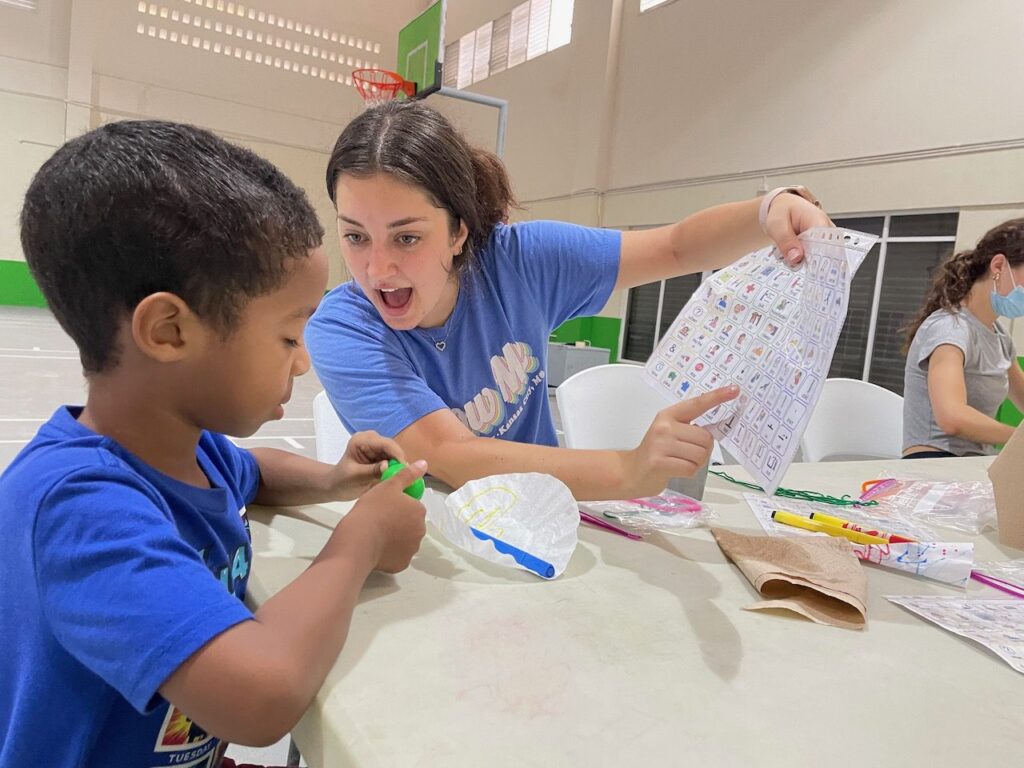
Others reported adapting from language intervention to articulation support, implementing AAC strategies for the first time, or modifying sessions based on client responsiveness.
These experiences reinforced an important principle we emphasize throughout our programs:
The activity does not drive therapy. The clinician does.
Caregiver Education Is One of the Most Important Services We Provide
A second major theme emerged across students, faculty, and community partners: caregiver education.
Students frequently described initial discomfort when speaking directly with caregivers. Many had limited experience explaining strategies, providing recommendations, or coaching parents in real-world settings.
By the end of the program, many identified caregiver interaction as one of their most meaningful learning experiences.
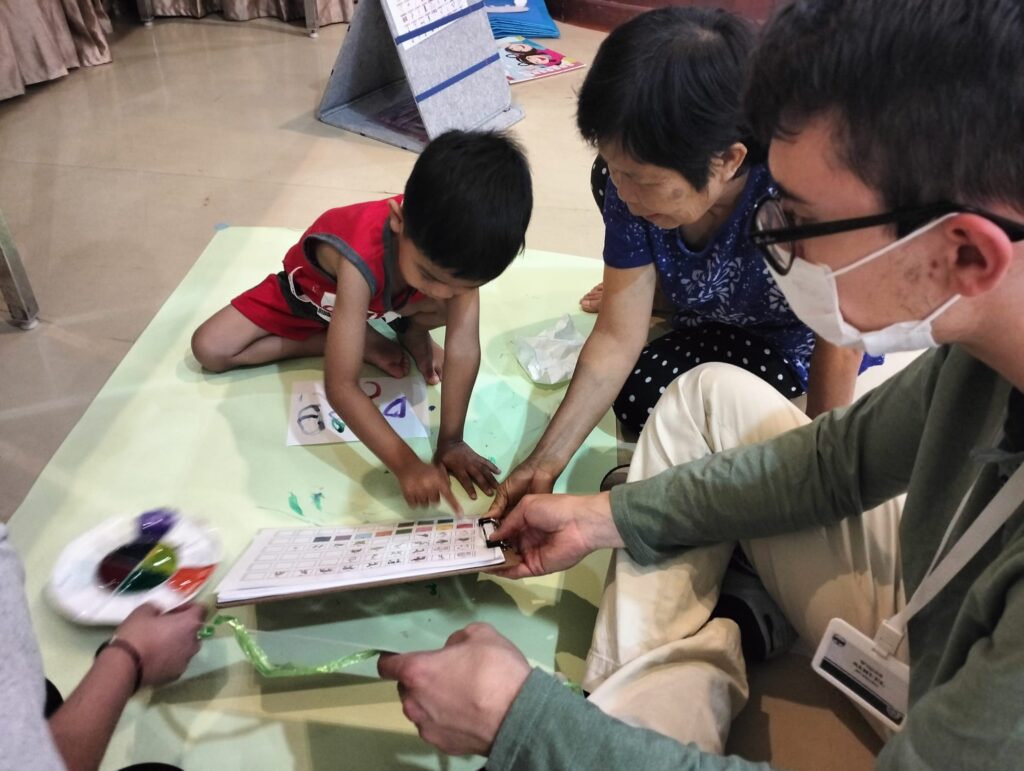
Students reported teaching communication strategies, demonstrating AAC supports, modeling language techniques, and helping families integrate intervention strategies into everyday routines.
Faculty independently identified caregiver education as one of the greatest opportunities for future program growth.
This feedback reinforced an important reality.
Children receive services for a limited period of time. Families support communication development every day.
As a result, Therapy Abroad is expanding efforts to develop caregiver resources that can continue supporting families long after our teams return home.
Future initiatives include diagnosis-specific caregiver handouts, visual supports, QR-code linked training videos, and asynchronous educational resources designed for varying literacy levels.
Clinical Preparation Begins Before Students Board the Plane
Another important lesson involved pre-departure preparation.
Students consistently requested additional clinical preparation before arriving in Belize. Specifically, students wanted more opportunities to practice screening procedures, evaluation protocols, documentation, treatment planning, and clinical decision-making.
Several students expressed confidence in their ability to learn once immersed in the experience but believed that earlier exposure would reduce unnecessary stress and allow them to focus more quickly on client care.
This feedback has prompted discussion regarding expanded pre-departure clinical modules, including:
• Screening administration
• Standardized assessment procedures
• SOAP documentation
• Language sampling
• AAC implementation
• Treatment planning
• Caregiver coaching strategies
The objective is not to eliminate challenge. Challenge is an essential part of learning.
The objective is to ensure students arrive with a stronger foundation so they can engage more fully in the clinical experience.
Supporting Children With More Significant Needs
One operational finding was particularly important.
Several faculty members observed that the severity of communication and developmental needs among some children exceeded expectations.
Children with severe to profound communication needs often required significantly greater support, including behavioral regulation, communication scaffolding, sensory accommodations, and individualized assistance.
These observations have prompted discussions regarding acuity-based scheduling and staffing models.
Rather than using a single camp structure for all participants, future programs may include differentiated schedules based on support needs.
Shorter sessions with increased staffing support may be more effective for children requiring intensive assistance, while longer sessions may remain appropriate for children whose needs are primarily speech and language focused.
This approach benefits both participants and students by creating learning environments that are appropriately matched to client needs.
Better Systems Create Better Experiences
Many of the improvements currently under consideration involve operational systems.
Screening days generated valuable services for local children, but they also revealed opportunities for greater efficiency.
Faculty and students identified several areas for standardization, including:
• Earlier access to demographic information
• Standardized screening folders
• Improved tracking systems
• Reduced duplication of documentation
• Better organization of client information
• More efficient movement between screening stations
Similarly, feedback highlighted the importance of quiet, air-conditioned spaces for documentation, treatment planning, supervision, and faculty collaboration.
These details may seem small, but they directly influence educational quality, workflow efficiency, and overall program effectiveness.
Strong programs depend on strong systems.
International Clinical Education Is Different Than Traditional Clinical Education
One of the most important lessons from Belize may be the simplest.
International clinical education is different.
Students are working in unfamiliar environments. Resources vary. Schedules change. Unexpected challenges occur. Community needs evolve.
Success depends on flexibility, adaptability, problem-solving, and collaboration.
Many students reported that these realities initially felt uncomfortable. By the end of the experience, however, they often identified those same experiences as the most valuable aspects of their learning.
Future pre-departure training will place greater emphasis on helping students understand these realities before arrival.
The goal is not simply to prepare students for Belize.
The goal is to prepare future professionals for the realities of clinical practice.
Continuous Improvement Is Part of Our Mission
Perhaps the most encouraging finding from this review process is that the identified challenges are largely operational rather than philosophical.
Students reported meaningful learning.
Faculty reported strong student engagement.
Community partnerships remain strong.
Families benefited from services and caregiver support.
The core model is working.
Our responsibility now is to continue refining it.
Every reflection, suggestion, concern, and recommendation becomes an opportunity to improve.
That process never ends.
As we prepare future programs, we will continue listening to students, faculty, caregivers, and community partners. Their feedback helps us build stronger educational experiences, better support families, and create sustainable international partnerships.
Continuous improvement is not a separate activity from our work.
It is the work.